


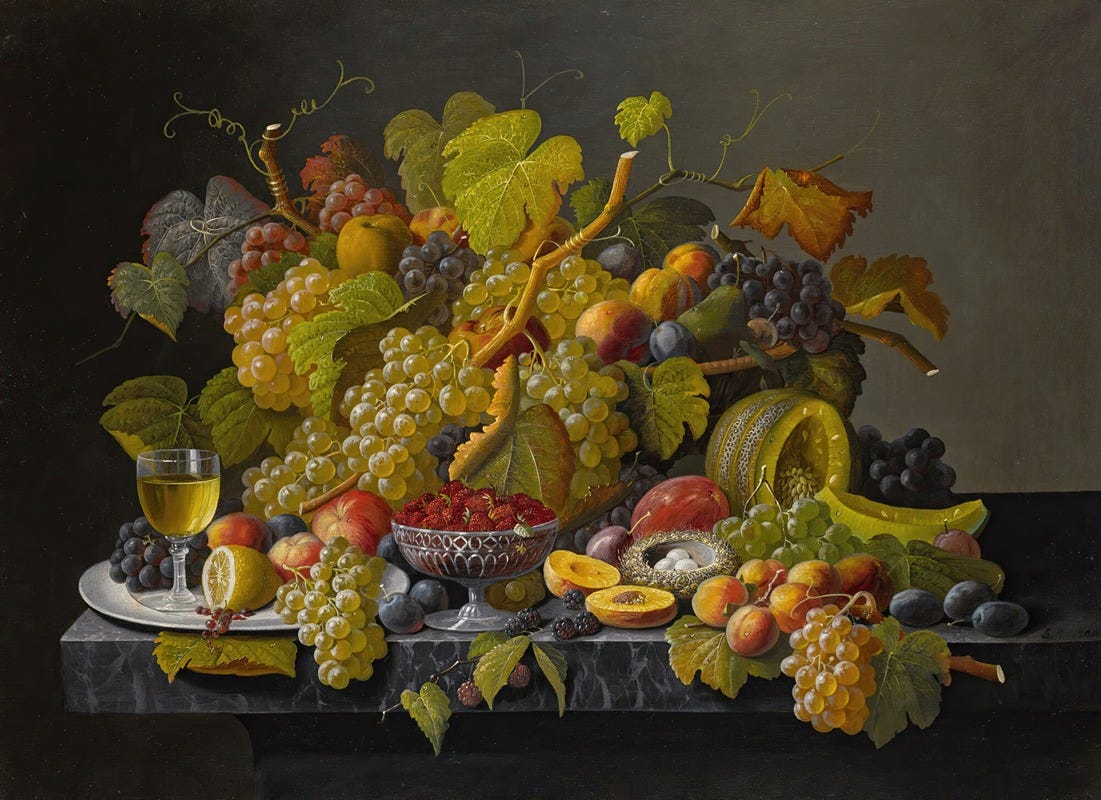
Tannins are a plant’s force field. The nitty gritty involves a lot of scientific words—like “polyphenol”—but here we keep it simple. Tannins keep animals from eating a plant’s fruit or seeds before they’ve reached peak ripeness, keeping plants, well, fruitful. They’re bitter, astringent. They make the mouth feel weird. Have you ever bit into a super crunchy grape? Or a blueberry that’s half green? That bitterness coating the mouth is the fruit’s tannins fighting back against the aggressor—your teeth.
When it comes to wine, tannins have a similar effect. They dry out the mouth, but that doesn’t mean asking for a dry wine will result in a bitter beverage. Bitterness refers to the taste; astringency is the sensation that palate experiences when a tannic wine hits the tongue. Dryness in wine refers to its sweetness, or lack thereof. A dry wine is not sweet and contains little to no residual sugar.
All grapes have tannins, but not all wine is tannic.
All grapes have tannins, but not all wine is tannic. How so? Wines get color and tannins from the grape’s skin, seed, and/or stems.1 The amount of time the juice comes into contact with these parts of the grape will greatly impact the amount of tannins in the wine and its color. Reds, for example, have loads of tannins compared to whites. Red wine is made by letting the juice sit with all the grape’s must.2 When making a white, these particles are usually removed from the liquid before fermentation. Orange wine and rosé are different conversations (for a different time if you’re lucky).
Some red wines are more tannic than others thanks to a couple of factors. First, there’s the nature of the grape’s skin itself. Thicker skinned grapes contain more tannins than thin-skinned ones. For example, Pinot Noir has a thinner skin than a Syrah grape, so, generally speaking, PNs are going to be less tannic. The more time the juice spends with the grape’s skins also impacts the mouthfeel. Less time in contact with those polyphenols leads to less tannic wine.
Maceration Station
Macerating the juice with the entire grape cluster—not just the skins—can also lead to a more astringent sipper. This is called “full-cluster maceration.” The juice gets all funky with the skins and the stems of the grape, leading to more tannic structure in the end product. Without getting too scientific, there are a number of ways to approach this style of fermentation. Some makers let the juice sit with just the naked stems if they’ve reached the correct ripeness; unripe stems tend to give wines a “greener” aroma. Makers might also let the intact fruit and stems hang out in vats before juicing, leading to carbonic maceration, which we discussed in relation to Beaujolais, that mellows out tannins in the end. Winemakers are returning to full-cluster maceration in a world full of mechanical destemming (the removal of the fruit from the stem), believing it gives the wine a better chance to express its terroir. One of the largest hallmarks of natural/responsible winemaking is letting the fruit speak for itself, for its geographic origin, so whole cluster maceration is a great example of practicing what you preach.
Emme Wines 2024 “we touch in silhouette” Grenache from Amador County - spends a week in the tank with its skins and stems, leading to a medium-bodied red with a strong tannic backbone. What I find cool about this winemaking method is its ability to lighten the wine’s color in the glass while maintaining a lot of structure—the skins never break, so less pigment is released.
Climate
Climate also has a lot to do with a wine’s tannic structure. All grapes react differently to different climates—how fun!!!!!—just like you do.3 Grapes grown in a warmer climate tend to ripen faster than grapes grown in a colder place, leading to a less acidic wine with a rounder mouthfeel. Just like the blue-skinned versus half green blueberry, the longer the fruit has a chance to ripen, the less those tannins fire up the palate.
Connecting the Dots
Other delicious things that are loved for their tannins: coffee, dark chocolate, tea. These things are what the wine world has used for years to describe tannins in a wine. The drinker is then tasked with deciphering these clues when the wine hits their palate. We’re not asking you to necessarily taste the black tea but to recall what a super strong cup of Lipton tea feels like in the mouth.
Le Coste 2023 “Bianchetto” Procanico from Lazio - tannins are grippy, meaning they take hold of the palate juuust enough; you also might see words like “chalky” or tea-like to describe this sensation.
Words used to describe tannins
soft/silky/velvety/plush: tannins that are polished and smooth—they aren’t always immediately noticeable
grippy/chewy: tannins that rub the tongue and gums like sandpaper (usually a younger wine)
chalky/powdery: tannins that feel grainy or powdery across the palate; maybe the whole mouth puckers
sharp/harsh: tannins that are bitter; can come from slightly underripe grapes
Some grapes produce more tannic wines that others, but that doesn’t mean that every wine that grape produces is going to be super tannic. Your best bet is to consult a member of the staff at the bar you’re sitting at or shop you’re perusing. Tannic wines pair best with rich and fatty foods—the fat balances the bitterness. Decanting a tannic wine can also enhance the drinking experience, as oxygen helps mellow out astringency, but if you don’t have time, just keep swirling your glass.
Sorry if this was all over the place.
Thank you for reading juice! You can further support my work by liking this post, leaving a comment, and sharing this newsletter with a friend. Keep up in real time on Instagram. Join the chat.


Exposure to oak can also add a tannic mouthfeel because wood has tannins too.
The stuff that’s left of the grape after it’s juiced; once it goes through fermentation, this stuff is called pomace.
Like who I am in the winter won’t change, but a real feel of 40 puts me in a better mood than a real feel of 18
Wanna hear more about climate and how location can alter taste!!!!! Love it